Custom tag and nameplate layout design
A tag layout is a small engineering drawing: finished size, hole positions, line order and letter height. Panel Tag Co prepares that drawing from your measurements, so a set of tags fits the doors, devices and brackets it was measured for.
Explore the service process
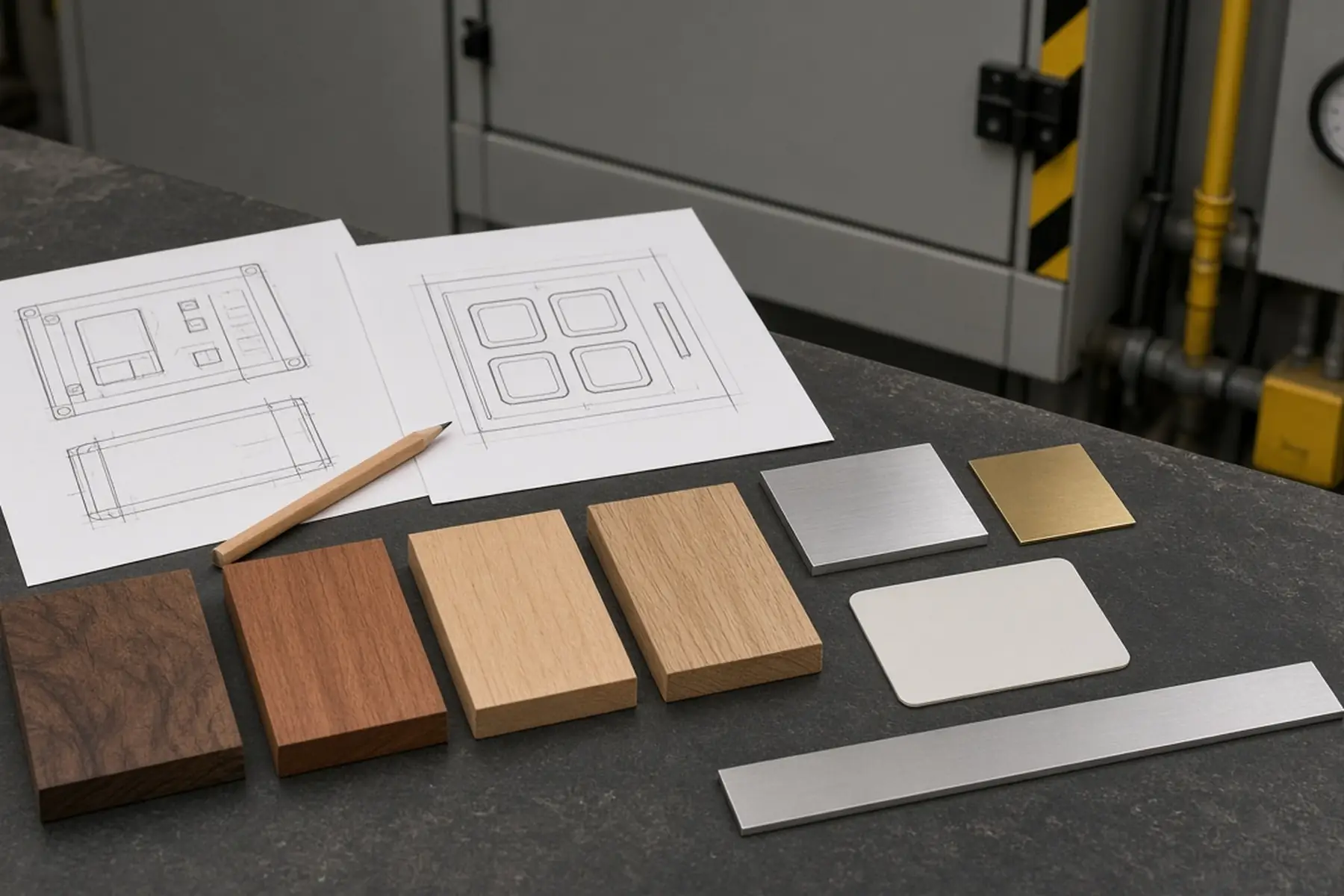
AI-generated process illustration. Equipment, materials and packaging shown are examples, not photographs of our workshop or completed orders.
What can be specified on a custom panel tag or nameplate?
On a Panel Tag Co layout you can specify the finished dimensions, corner style, hole positions, material, line order and letter height. Most buyers fix one layout per tag family and let only the legend change. Supply the measurements and the approved text. The written quote and the proof then record exactly what will be made.
How is one layout built for a whole lighting panel?
Take lighting panel LP-02 on a ground floor. The electrical contractor wants an Equipment Panel Tag Set: one header tag for the panel and a circuit tag for each of its 24 breakers. The header carries the panel ID, a description and the location. Each circuit tag carries the circuit number and a short description such as Lobby Lighting. We draw two layouts, not twenty-five. The header is wider with larger letters, and the circuit tag is sized to the breaker pitch the contractor measured. Circuit numbers stay two digits, so 07 keeps its zero. The set identifies the equipment. It does not check the circuit schedule, which remains the contractor's document.
An example from this collection
Equipment Panel Tag Set
Start with the approved panel schedule and match every printed identifier to it. Provide label sizes, attachment and exposure requirements; the set identifies equipment and does not verify the electrical design or circuit information supplied.
The details to personalize: panel id, circuit, description, location. The product page lets you enter them and carry the design into your quote request.
How does a tag layout get from measurement to drawing?
01
Measure the mounting surface
Record the clear width and height where the tag sits, any existing holes and what is beside it. For a replacement, measure the old plate and its hole centers instead of guessing from a photo.
02
Fix the line order per tag family
Decide which line leads on each tag type: the identifier, the description or the location. Keep that order the same across a panel so an electrician reads every tag the same way.
03
Check the dimensioned tag drawing
We return a layout with sizes, hole positions and your longest legend in place. Compare it with the door or device, in the original units, and mark corrections on the drawing itself.
Order terms in brief: Low minimums · production takes no more than 7 days, plus transit · rush available · worldwide shipping · 100% satisfaction refund. Full wording in the FAQ.
Questions about custom tag and nameplate layout design
What can be specified on a custom panel tag or nameplate?
On a Panel Tag Co layout you can specify the finished dimensions, corner style, hole positions, material, line order and letter height. Most buyers fix one layout per tag family and let only the legend change. Supply the measurements and the approved text. The written quote and the proof then record exactly what will be made.
Can a new plate reuse the mounting holes already in the door?
Yes, if you supply the hole pattern. Give the center-to-center distances, the hole diameter and the distance from each edge, in the units of the original drawing. Outside dimensions alone are not enough. A plate that matches in width can still miss the existing holes by a few millimeters.
Do you decide what a panel tag has to say?
No. Panel Tag Co lays out the text you approve. The identifiers, circuit descriptions, voltage wording and any warning text come from your drawings and from the person responsible for the installation. If a label is regulated, tell us the specification it must follow and have that person review the proof.
Is a new tag layout extra compared with a catalog format?
It can be. A catalog format used at its shown size needs little drawing work. A new size, an unusual hole pattern or a physical sample takes design time, and the written quote lists that as its own line. Reusing one layout across many legends keeps that line small.