Panel Tag Co · buyer guide
Where to save on a custom identification project
Compare material choices against exposure, cleaning, readability and attachment before comparing appearance. If the budget needs to fall, first review decorative detail, size, layout variation and packing complexity. Keep the features required for the actual installation in the specification.
Reviewed 2026-09-05 · AI-assisted editorial review. General buying guidance; illustrative scenarios are not customer case studies. Images are AI-generated concepts.
Describe the environment before choosing the finish
A photograph of a clean new plate does not tell you whether the same construction suits your installation. Begin with the location of the plate: inside a cabinet, on equipment that is regularly cleaned, at an exposed gate, or beside a control that is frequently handled. Record the substrate it will attach to and the conditions the marking and attachment will encounter. If a project specification names a material, marking method or standard, provide that document with the request.
Separate appearance from function. A metallic appearance might be a decorative preference; a particular alloy, thickness or marking process might be an installation requirement. Ask the project owner to identify which choices are mandatory. Do not substitute a cheaper material solely because the sample photographs look similar.
Look for savings in the structure of the order
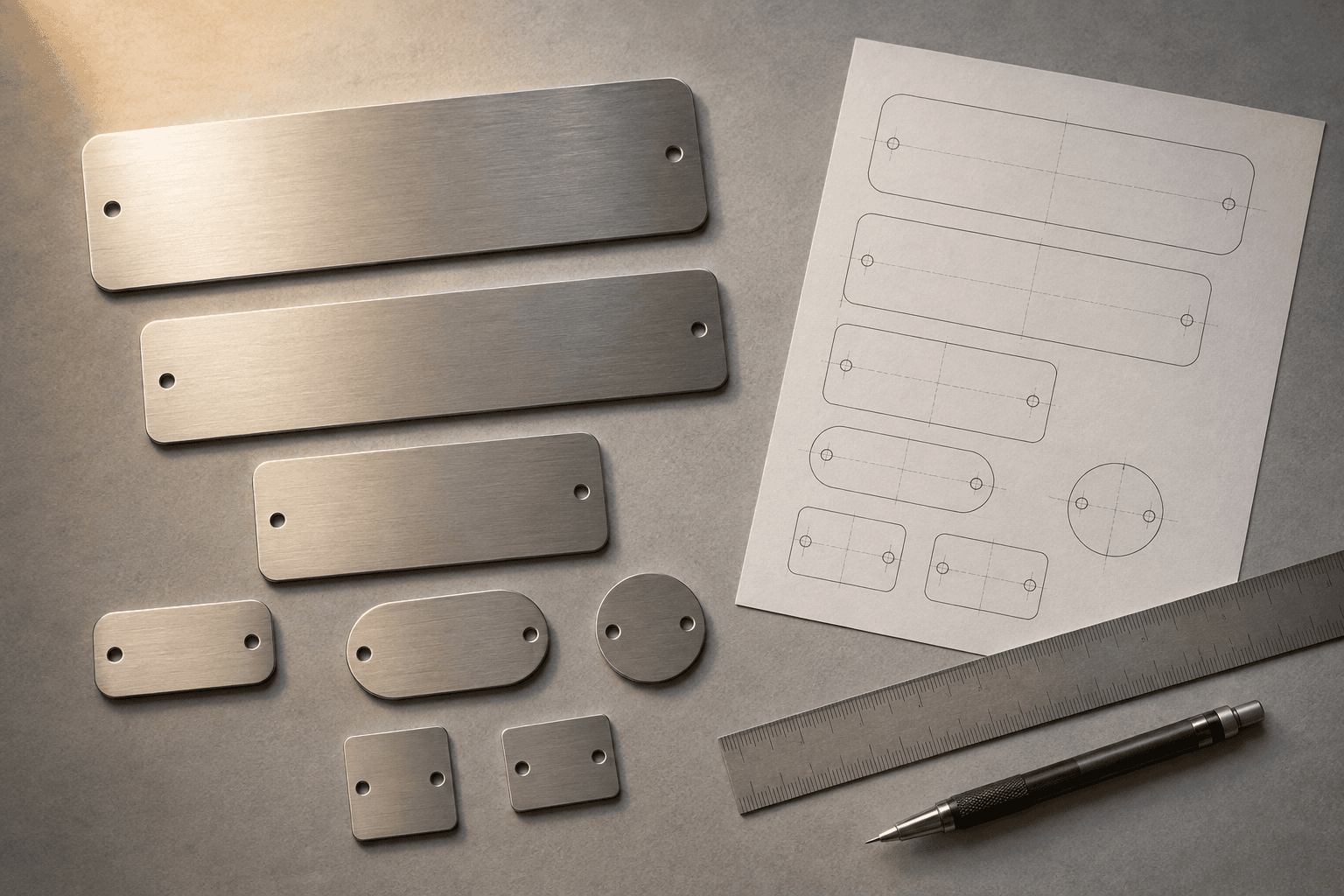
One repeated layout with changing identifiers can be simpler to prepare than a collection of unrelated drawings. Group the items by layout and separate the variable data into clearly named columns. Standardizing a hole pattern or a plate outline may also make a project easier to quote, provided the actual equipment and mounting points permit that change. Ask for an option rather than assuming a saving.
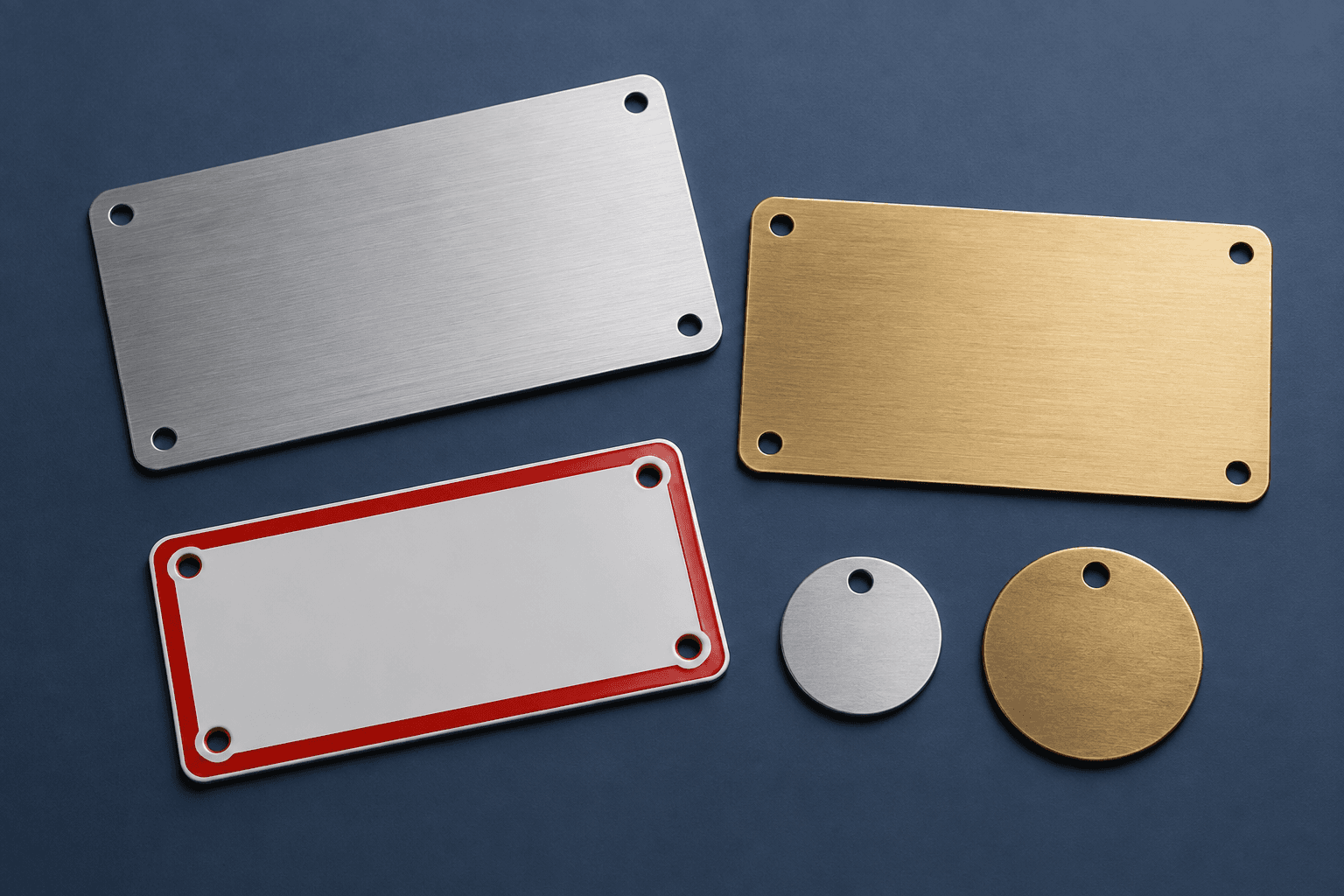
Decoration is another decision to examine. A border, ornamental shape or additional color may matter less than readable identification. Compare the complete alternatives in a written quote. Keep the identifier, required wording and installation constraints the same so the comparison answers the intended question. A lower unit price is not useful if it excludes preparation or packing that the other option includes.
Check readability at the proposed size
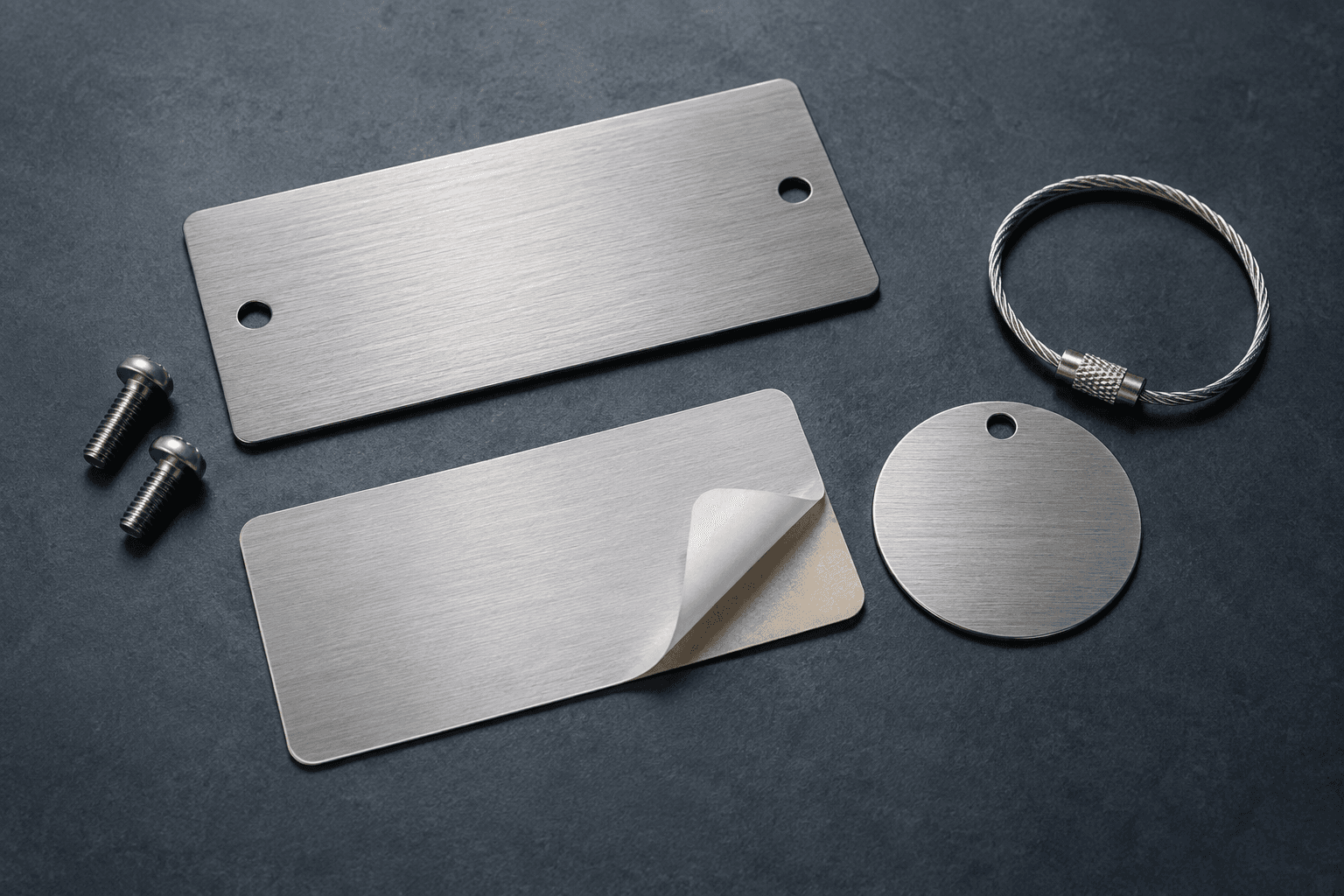
List the longest identifier and the longest descriptive line, not only a short sample. Include any punctuation, special characters or separate languages. Review the layout at its proposed finished dimensions and intended viewing distance. Mounting holes and edge margins consume usable space; the outside dimensions of a plate are not the same as its available marking area.
When a layout feels crowded, consider a larger plate, shorter approved wording or a different hierarchy before shrinking everything. Only the person responsible for the identification scheme can authorize a change to required text. A design review helps find a practical arrangement, but the project owner must confirm the final specification.
Plan replacement and reordering
Keep a versioned copy of the approved drawing, identifiers, material choice and mounting details. A useful reorder request identifies what is unchanged and what is new. If one damaged tag needs replacement later, a stable row identifier can make it easier to match the correct record without recreating the whole order from a photograph.
For illustration, imagine a facility preparing a set of equipment plates with several different panel layouts. The buyer could request one option with the original layouts and another with compatible standardized outlines. That is a planning example, not a reported customer job or a claim of measured savings. The actual quote establishes whether the alternative reduces cost.
Send a comparison brief
Include the quantity by layout, dimensions, hole positions, mounting surface, required wording, environment, drawing and delivery destination. Identify the current budget constraint and the requirements that cannot change. Ask for the price of each complete option, including preparation, personalization, packing and shipping, plus any differences in samples or approval steps.
Make the final decision on suitability and total order cost. If exposure performance is essential, request the relevant material documentation or an appropriate sample evaluation. An illustration, a finish name or the presence of a metal plate does not establish durability or regulatory compliance.
A design to consider: Equipment Panel Tag Set
Turn a circuit schedule into a coordinated identification set. This tag set brings panel headings and individual circuit labels together around the naming system your team already uses.
Start with the approved panel schedule and match every printed identifier to it. Provide label sizes, attachment and exposure requirements; the set identifies equipment and does not verify the electrical design or circuit information supplied.
Example wording: Panel ID: LP-02; Circuit: 07; Description: Lobby Lighting; Location: Ground Floor. These illustrative names explain the layout; they are not a customer case study.
A design to consider: Machine & Equipment Nameplates
Give a machine or piece of equipment an identification plate linked to its records. The layout can combine an asset number, description and selected technical fields you supply.
Specify whether the plate supplements an existing manufacturer nameplate or replaces a damaged custom label. Reproduce only verified data, and provide exposure and mounting details before selecting the material or adhesive.
Example wording: Asset ID: EQ-0042; Equipment: Transfer Pump; Location: Plant Room 2; Reference: Maintenance Schedule A. These illustrative names explain the layout; they are not a customer case study.
A design to consider: Asset ID & Inventory Plates
Connect each physical asset to the inventory system with a durable identification plate. A human-readable ID can sit beside a barcode or QR code you supply.
Choose the exact data encoded in the code and test a sample at the proposed size. Keep the printed ID readable as a fallback, and use an address you control if the code links to an online record.
Example wording: Asset ID: AST-00042; Description: Workshop Equipment; Owner: Northline Operations; Record address: https://example.com/assets/AST-00042. These illustrative names explain the layout; they are not a customer case study.
Compare the decision, the requirements and the approval
Use this comparison to frame specific questions. The written quote should identify the complete option being compared and the requirements it assumes.
| Option | What to specify | What to review |
|---|---|---|
| Reduce decorative variation | Keep required identifiers and mounting geometry; compare fewer outlines or border treatments. | Ask whether any setup or finishing charge changes in the complete quote. |
| Change the material direction | Review the alternative against the actual exposure, surface and project requirements. | Request the exact material and finish description, not only a broad label such as metal. |
| Standardize compatible layouts | Confirm that each installed location accepts the proposed outline and text area. | Compare the full schedule so an exception is not missed in a representative sample. |
Use a requirement matrix before comparing prices
Write the non-negotiable requirements in the left column of a small comparison sheet. These might include the identification scheme, available mounting holes, maximum outline, required wording and the documented environment. Put the original proposal and each alternative in adjacent columns. For every row, record whether the option meets the requirement, needs an additional part, or still needs review. An empty cell is an unanswered question, not agreement. This turns a vague request for something cheaper into a comparison the production team can evaluate.
Keep preferences in a separate part of the sheet: decorative borders, corner style, an ornamental outline or how similar the finish should look to an existing set. Ask which of those preferences affects the quote. Do not assume that a smaller piece, another color or another material is automatically cheaper; setup, minimum quantities and finishing can change the comparison. Include the practical reason for each constraint. A hole pattern that matches an installed panel is a different kind of requirement from a preferred border width. The useful saving is the option that preserves the job the tag has to do while reducing an identified part of the order cost.
Protect identifiers when the schedule moves between files
Treat equipment identifiers as text even when they contain only digits. Microsoft documents that Excel can remove leading zeros and change long numeric-looking values, and recommends importing affected columns as text. Changing the cell display after information has already been lost does not recover the original identifier. Review the imported value against the source schedule before generating a proof. This matters when two tags would become indistinguishable after an unintended conversion.
For the order workflow, retain an untouched source export and work in a separate versioned file. Check a few deliberately difficult rows: an identifier with a leading zero, an unusually long value, a slash, an accent, and the longest legend. Use a preview or plain-text view to inspect the exported file as well as the workbook. Then reconcile the number of unique layouts and the quantity of repeated copies. If the team discovers a discrepancy, correct it in the controlled file and record the revision; do not send a second informal list that leaves both versions looking current. The final file should explain intentional blanks and identify who owns the legend content.
Define a sample review that can answer the real question
A sample request is most useful when it states what you need to learn. Appearance, readability, fit and attachment are different questions. For a color or texture decision, identify the finish direction and the lighting in which it will be judged. For fit, use the actual hole pattern or a measured fixture. For readability, include the hardest legend rather than the shortest one. For attachment or exposure performance, ask the responsible project team what documented material information or evaluation is appropriate to the installation. A pleasing sample photograph cannot stand in for those decisions.
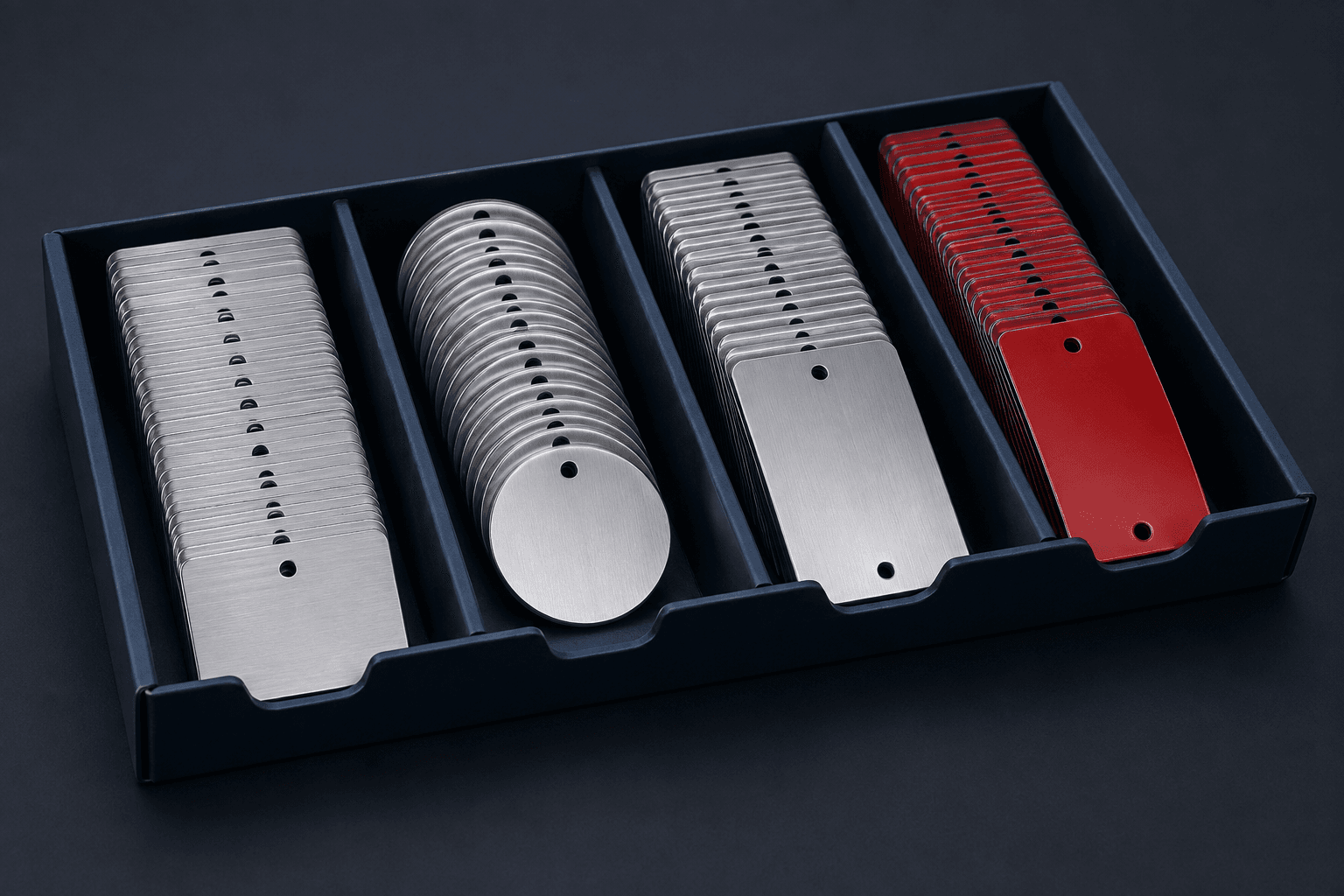
Record the accepted sample or drawing with a stable reference. List any departures from it in the quote or proof, such as a different size, a revised corner shape or a change in marking method. When receiving the batch, inspect the group labels first, then reconcile quantities and identifiers against the approved schedule. Keep uncertain items separate so an installer does not treat them as released parts. If replacements may be required later, preserve the source file, drawing revision and accepted finish reference together. That preparation makes a future matching request more specific without promising that a material, price or production slot will stay available.
The planning sequence in 25 seconds
This narrated overview uses AI-generated concept illustrations. The transcript is included so you can review the sequence without playing the video.
25-second overview
Define the installation
Before changing a tag material, identify what cannot change: the legend, mounting pattern, exposure and project requirements. Compare complete options, preserve identifiers in a controlled file, and review the longest text at the proposed size. Keep the approved drawing with the order record. Use the tag calculator to prepare quantities for your quote.
Prepare your brief and request a written quote.
Reconcile your tag quantities
Enter the quantities or timing allowances from your own plan. Review the result and carry it into your quote request. The tool does not reserve materials, production capacity or delivery services.
Method: Multiply each entered group by its pieces per group and add explicitly requested extra or spare pieces. The calculation uses buyer inputs, with no inferred prices or availability.
Build your plan
Use one row per tag type. For example: Valve labels | 20 | 2. Material, dimensions, legend text and mounting belong in the final tag schedule.
Questions to settle before ordering
Can I order a cheaper material that looks the same?
You can request that alternative, but compare it against the installation requirements first. Explain which visual qualities matter and which dimensions, identifiers, exposure conditions and attachment details must remain fixed. Ask for a complete written option so the saving is not based on omitted setup, packing or mounting components.
What should a panel-tag spreadsheet include?
Use a stable item ID, exact legend, layout or drawing reference, material direction, dimensions, mounting detail and quantity. Add an installation or packing group when the order spans several panels. Keep identifiers as text and reconcile the exported file with the approved source. Do not include unrelated personal information.
Does a metal tag automatically meet an industrial specification?
No. A broad material name does not establish the required alloy, coating, marking process, attachment or performance. Supply the applicable project specification and ask the responsible reviewer to confirm the proposed construction. The final design and material documentation should address the installation you actually have.
How should I compare a small replacement order with a full batch?
Identify the exact item and drawing revision for the replacement, then request its complete order cost. A repeated design still may involve setup, material selection, finishing and packing. Compare replacement planning with your actual records; do not assume the earlier unit price will apply to a different quantity or later order.
Your order brief and review record
Keep the brief, source artwork, approved proof and final instruction file together. When requesting a revision, identify the earlier version and explain exactly which fields or dimensions change. The person approving the order should be able to trace each finished item to that record.
At receiving, compare the shipment with the approved quantity and grouping before distributing the pieces. Record a discrepancy using the affected item identifier and clear photographs, and follow the agreed order terms for reporting it. Preserve approved files for a later reorder while asking for a current quote and specification at that time.
- Required material or project specification
- Exposure and cleaning conditions
- Finished dimensions and mounting pattern
- Longest text and exact identifiers
- Quantity by layout and version
- Complete option pricing and receiving destination
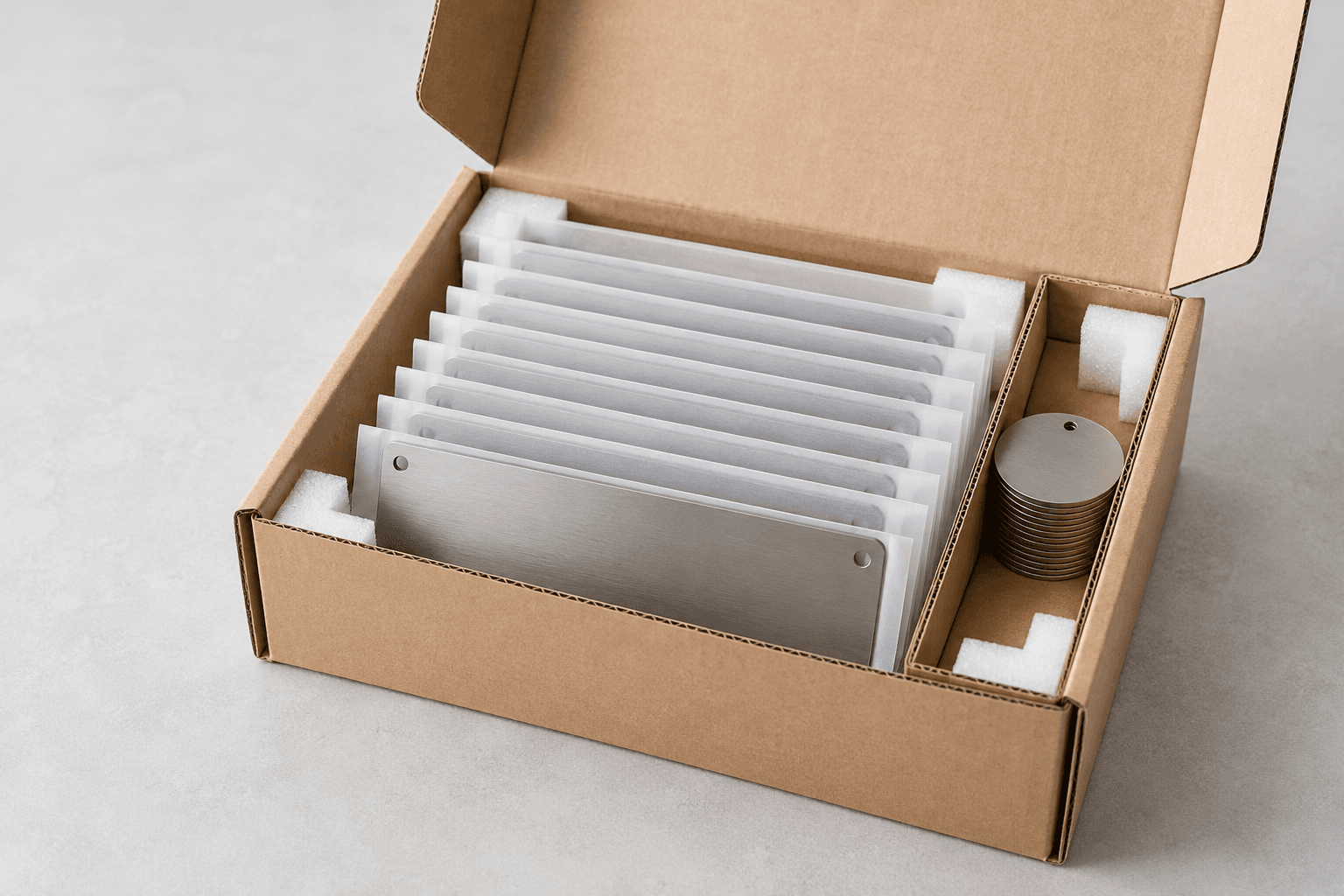
Turn these decisions into a specific request
Share the intended use, quantity, dimensions, artwork status and required arrival date. Identify the requirements that cannot change and any alternatives you want compared. The next useful result is a written specification and quote you can review.
Sources and scope
The sources below support the cited technical details. The ordering workflows are editorial recommendations. Your project specification, price and schedule are established in the written quote and approved proof.
- Microsoft: Keeping leading zeros and large numbers · checked 2026-09-05
Which buying guide should you read next?
All buying guidesCompares two published facility electrical identification specifications side by side to show that nameplate colors differ by owner, then lists exactly what to send so engraved tags match your own specification. Panel Tag Co engraves to the specification you supply and makes no code-compliance claim.
Protect the exact identifier through spreadsheet import, export, proof and packing while separating engraving text from quantities and refusing to reconstruct lost digits without an authoritative schedule.
Count unique legends, physical copies and installation kits separately. Preserve identifiers as text and attach the approved drawing revision, dimensions and mounting detail to each group. Split the packing schedule by panel or site without changing the source identifiers.
A replacement plate needs a complete mounting pattern as well as its outside dimensions. Preserve the original units, hole references and approved drawing.