Panel Tag Co · specification guide
Unique panel legends versus physical tag quantities
A panel-label order needs at least two totals: the number of different inscriptions and the number of physical pieces to make. Sixteen different legends with three copies each require forty-eight pieces. If some copies use a different size, material or mounting arrangement, preserve those specifications as separate order lines even when the words match. A spreadsheet row is a container for information; its presence alone does not specify how many objects to produce.
Reviewed 2026-09-05 · AI-assisted editorial review. General buying guidance; illustrative scenarios are not customer case studies. Images are AI-generated concepts.
Start with the approved equipment schedule, add an explicit quantity to every production line, and reconcile the order by both inscription and physical specification. Tell the supplier whether the quoted unit is a finished plate, a set of several plates or an entire installation kit. This makes the quote comparable to the actual delivery you need and gives receiving staff a way to check the shipment without guessing what a quantity of one means.
Keep three counts available throughout the order
The unique-legend count answers how many different text entries need to be represented. The production-line count answers how many distinct combinations of wording and construction need to be specified. The piece count answers how many physical plates should arrive. These totals can all differ without any error. The problem begins when a file or quote labels all three simply as quantity.
For example, the same approved legend may appear on a small interior plate and a larger exterior plate. That is one unique legend, two production lines and however many copies you assign to those lines. Combining the rows because their text matches loses the construction distinction. Separating every copy into its own row can also work, but only if everyone knows that the row then represents a single physical object.
Choose one row convention before preparing the full schedule. For a mixed batch, a stable line reference plus an explicit copies field usually makes exceptions easier to discuss. If your source already lists one object per row, preserve those object references and document any aggregation into a purchasing view. Keep the detailed source so the quote summary can be traced back to the intended pieces.
Do not normalize an identifier to make grouping easier
Microsoft documents that Excel can remove leading zeros when it converts numeric-looking entries to numbers. Preserve identifiers as text when importing a tag schedule. This protects the supplied string; it does not decide whether two differently written strings were intended to name the same asset.
For this workflow, group only entries that the authorized schedule treats as equivalent. A legend containing a space, prefix, punctuation mark or leading zero should not be silently merged with a similar-looking entry. Record a potential duplicate as a question for the schedule owner. The count can remain provisional while that question is resolved, rather than making an uncertain merge look like a confirmed saving.
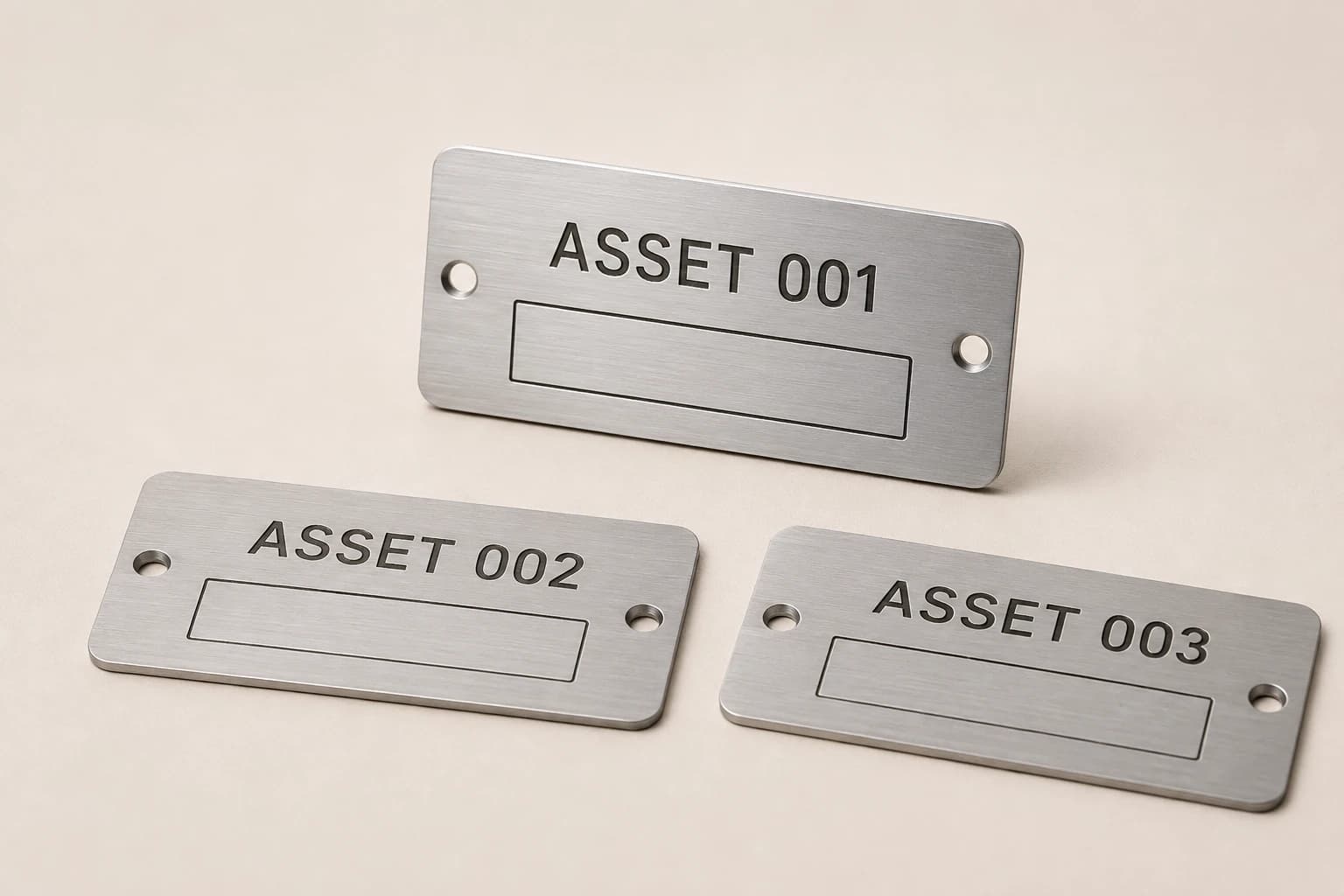
Also distinguish text that belongs on the plate from an internal inventory reference. A purchasing line might be called LINE-014 while its engraving reads P-004. Both values are useful, but they have different audiences. Label the columns clearly and mark whether a field is engraved, printed on packing, or retained only in the order record. The production team should not have to infer that from a sample screenshot.
Sources: Microsoft Support: Keeping leading zeros and large numbers
Make repeated wording carry its full specification
Use a construction reference for the approved combination of material, thickness, dimensions, finish and mounting detail. A short reference such as FORMAT-A can point to a controlled drawing or specification, while the order line retains its exact legend and copies. The reference saves repeated typing without replacing the actual drawing. If the format changes, issue a revision and identify which lines adopt it.
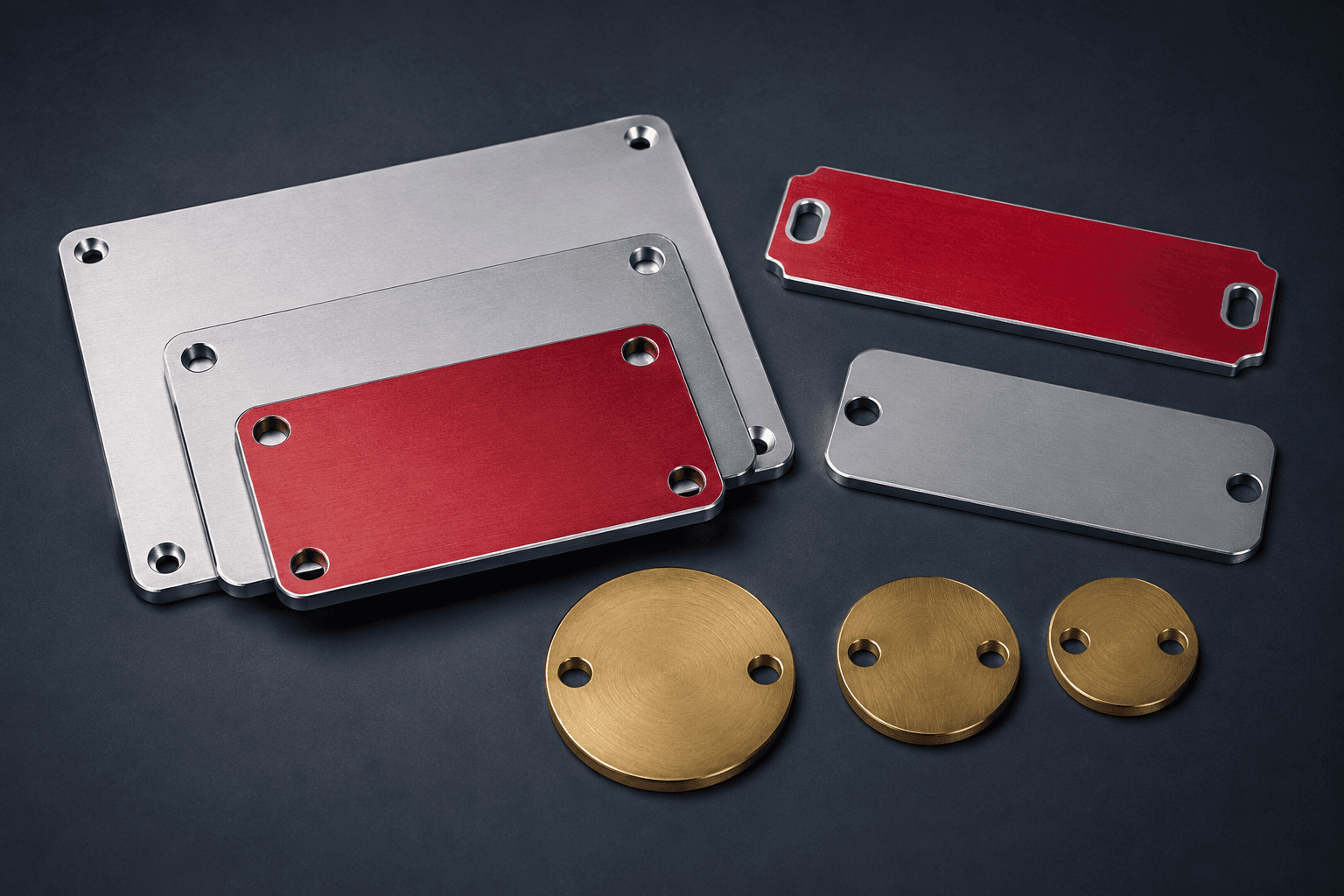
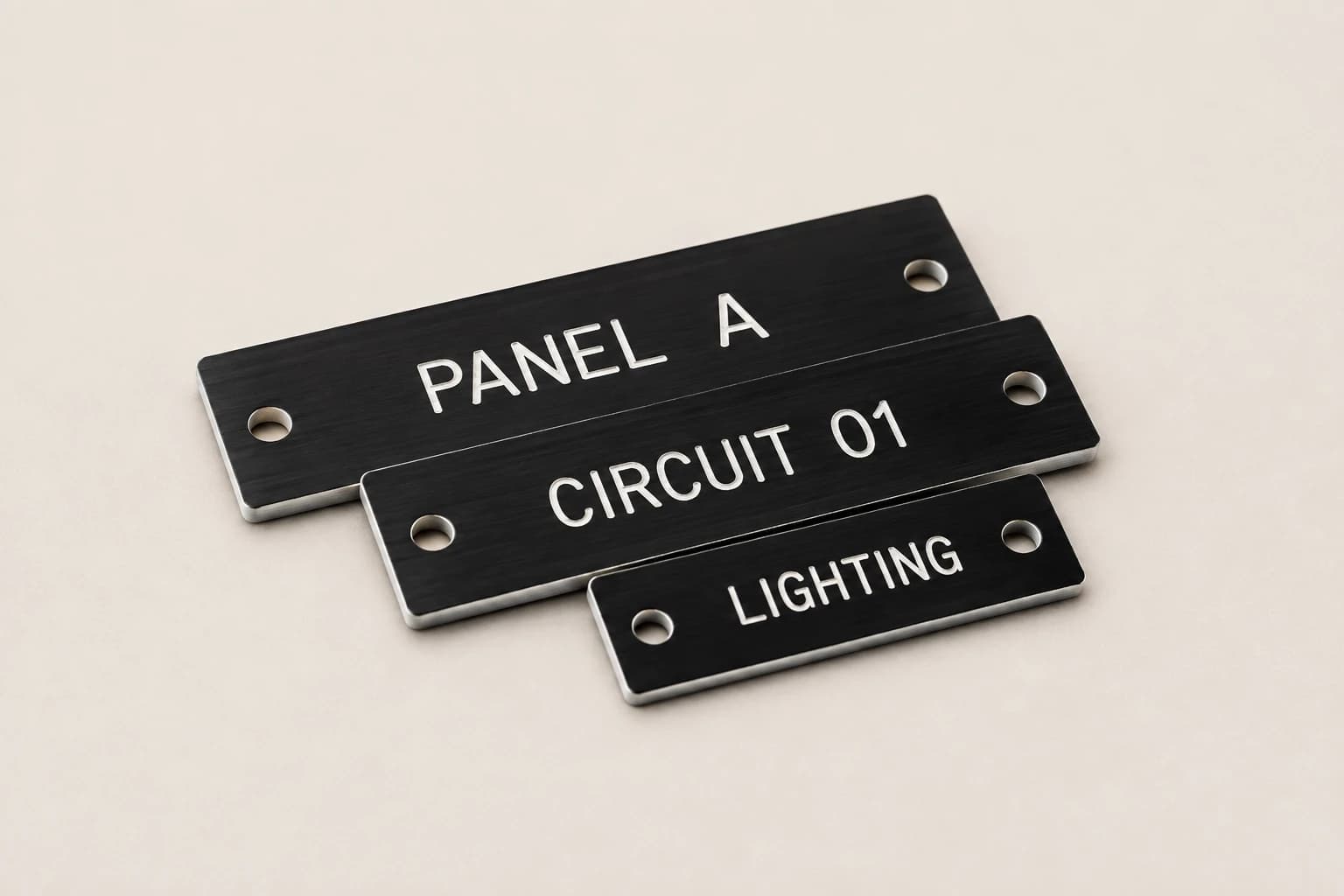
Do not treat two plates as interchangeable because they share a color and outline in a concept image. One may have adhesive backing and another may have mounting holes; one may have a different thickness or an orientation tied to its intended position. Keep those choices visible in the quote. If any construction detail is unknown, ask for a proposal against a clearly stated requirement instead of entering a guessed specification as approved.
This separation also helps with purchasing alternatives. A supplier can quote two proposed materials against the same legend and quantity schedule. Compare those as alternatives, not as extra pieces accidentally added to the order. Mark the selected option before approval and remove the unselected option from the released production list.
Illustrative example: eighteen legends and sixty pieces
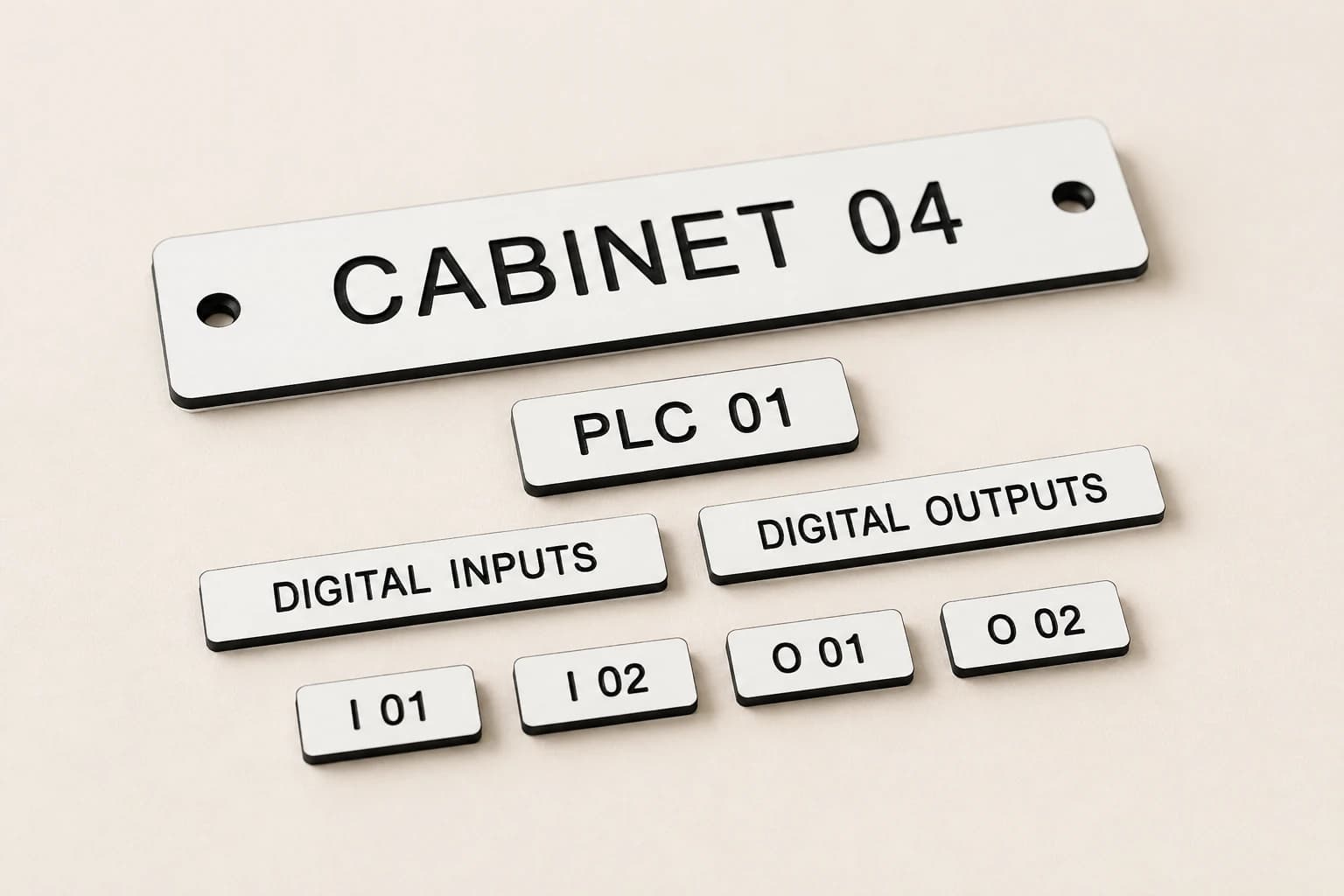
Consider a fictional order with sixteen cabinet legends and two repeated utility legends. Each cabinet legend needs two small plates and one large plate. Each utility legend needs four plates. The base order is 16 × 2 = 32 small cabinet plates, 16 × 1 = 16 large cabinet plates and 2 × 4 = 8 utility plates: fifty-six physical pieces in total.
The buyer then deliberately adds four spare utility plates, two of each utility legend. The final order is sixty pieces. It still contains eighteen unique legends. If each distinct legend and construction combination gets its own production row, there are thirty-four base rows: sixteen small, sixteen large and two utility rows. The spare allocation can be recorded in those utility rows as six copies each, or in separate spare rows with clear cross-references.
Load the calculator example to check 32 + 16 + 8 + 4 = 60. The downloadable file is a group-level illustration of that arithmetic, not the thirty-four-row production schedule. For a real order, expand the groups into exact authorized legends and allocate the spare copies explicitly. A total of four unspecified spares cannot tell production which inscription to engrave.
Nothing in this example establishes a recommended spare percentage. The four extra pieces are an entered purchasing choice. If the buyer instead needs one spare of every cabinet legend, the spare quantity and possibly the construction mix change. Recalculate from that stated decision and update the proof and packing allocation before release.
Reconcile the physical pieces in this example
Load the illustrative article example, then replace each group and quantity with your approved order. Keep exact identifiers and specifications in the separate schedule.
Method: Multiply each row count by copies per group, then add only explicitly entered spares. This is an inventory calculation, not an engineering or compliance review.
Build your plan
Use one row per tag type. For example: Valve labels | 20 | 2. Material, dimensions, legend text and mounting belong in the final tag schedule.
Use the article’s example files
This is a fictional planning example. Import identifier columns as text and replace sample rows with authorized project data before requesting production.
Choose the total that answers the question
Choose the grouping that answers the purchasing question; keep the other references in the schedule.
| Option | What it counts or controls | What it does not establish |
|---|---|---|
| Unique legends | Different authorized inscription strings. | How many copies, formats or installation destinations are required. |
| Production lines | Distinct legend and construction combinations under the chosen row convention. | A one-to-one relationship with physical objects unless explicitly defined. |
| Physical pieces | All approved copies, including identified spares. | Whether those copies contain the correct text or mounting details. |
| Installation kits | The receiving or installation groups requested by the buyer. | A fixed number of plates in every kit. |
| Quoted sets | The supplier’s explicitly described selling unit. | Equivalence to another quote whose set contents differ. |
Compare quotes using the same bill of pieces
Send the same released legend schedule and construction references to each supplier whose proposal you want to compare. Ask each quote to state its unit of sale and included services. A low price per set is not meaningful until you know whether a set contains all the required plates, only one construction type, or just one repeated inscription.
Separate design or setup charges, individual personalization, packaging by kit and shipping from the physical-unit comparison when those items appear separately. A proposal with fewer pieces can look cheaper while leaving part of the job unfilled. Reconcile the quoted quantities first, then compare the commercial total and any assumptions that affect it.
If you change the copy count during negotiations, circulate a new schedule revision. Do not rely on an email sentence saying add a few more of those to override an older attachment. State the affected line references, previous copies, revised copies and new total. Ask for the quote and proof to identify the same revision before accepting the order.
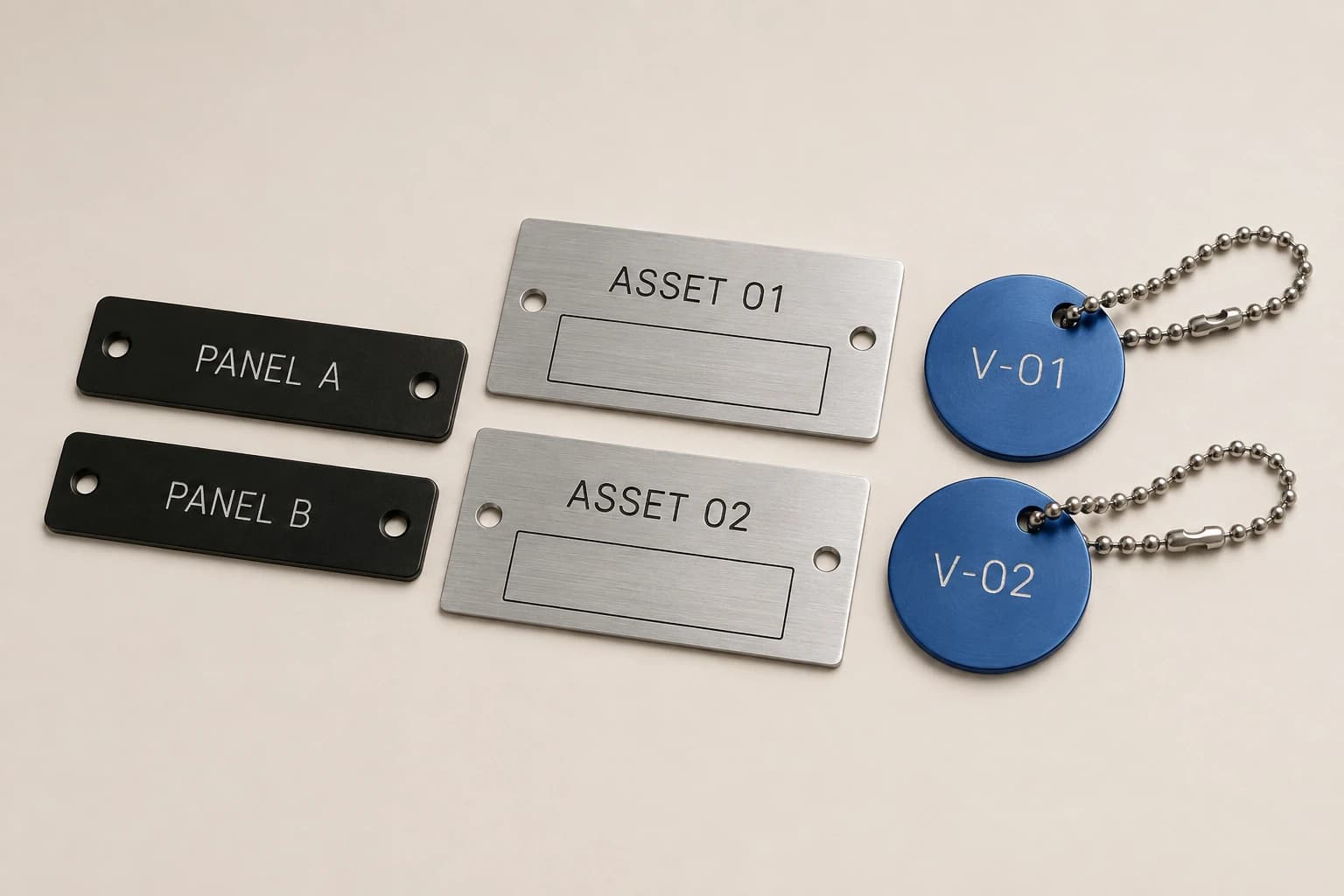
Check the mixture as well as the grand total
A box containing sixty plates can still be wrong if four extra copies of one legend replace four missing copies of another. Receiving needs a line-level or kit-level reconciliation, not only a total count. Match each item to its reference, confirm the copies, and record a discrepancy without rewriting the approved schedule to match what arrived.
For staged deliveries, keep ordered, dispatched and received quantities in separate fields. Do not reduce the original order quantity each time a parcel arrives; that erases the baseline needed to see a shortage. Record the shipment reference and remaining balance instead. A replacement shipment should identify which discrepancy it resolves so it is not counted as an unplanned additional installation piece.
Retain the final schedule with its proof revision for future reorders. A reorder request should say which lines repeat unchanged and which need new wording or construction. The historical count gives context, but it does not authorize an automatic repeat of the full batch when only two specific plates are needed.
Questions before ordering
Is one line in my spreadsheet one tag?
Only if that convention is explicit. A line may describe one object, several copies of a legend, or a group used for preliminary planning. Use a numeric copies field and define the quoted unit before production.
Can identical legends be combined for a cheaper quote?
Combine only when the authorized wording and full physical specification match. Retain the destination and copy allocation separately. Similar text is not enough to establish that two lines are interchangeable.
Should spare labels be blank?
That is a separate purchasing decision. State whether each spare repeats a specific inscription or is intentionally blank, and explain the intended later marking process if relevant. Do not leave production to choose.
What should I send for an accurate quantity quote?
Send exact legends, copies per line, construction references, explicit spares, requested kit allocation and one schedule revision. Include a group summary if helpful, but retain the complete production detail behind it.
Explore the collection’s design direction
This existing narrated collection overview introduces the product designs. It provides visual background; the specific decision, comparison and worked example are in the article above. Images are original concepts rather than completed customer orders.
25-second overview
Define the installation
Before changing a tag material, identify what cannot change: the legend, mounting pattern, exposure and project requirements. Compare complete options, preserve identifiers in a controlled file, and review the longest text at the proposed size. Keep the approved drawing with the order record. Use the tag calculator to prepare quantities for your quote.
Prepare your brief and request a written quote.
Bring this decision into your design brief
Choose a relevant product direction and include the measurements, quantity, approved wording and delivery destination for your project. We can then develop a specific design and quote around those requirements.
Sources and scope
The sources below support the cited technical details. The ordering workflows are editorial recommendations. Your project specification, price and schedule are established in the written quote and approved proof.
- Microsoft Support: Keeping leading zeros and large numbers · checked 2026-09-05
Which buying guide should you read next?
All buying guidesCompares two published facility electrical identification specifications side by side to show that nameplate colors differ by owner, then lists exactly what to send so engraved tags match your own specification. Panel Tag Co engraves to the specification you supply and makes no code-compliance claim.
Protect the exact identifier through spreadsheet import, export, proof and packing while separating engraving text from quantities and refusing to reconstruct lost digits without an authoritative schedule.
Count unique legends, physical copies and installation kits separately. Preserve identifiers as text and attach the approved drawing revision, dimensions and mounting detail to each group. Split the packing schedule by panel or site without changing the source identifiers.
A replacement plate needs a complete mounting pattern as well as its outside dimensions. Preserve the original units, hole references and approved drawing.