Panel Tag Co · specification guide
Packing panel labels into installation kits
An installation kit should collect the exact approved labels needed for a defined cabinet, work area or installation stage. Give the kit a stable reference, list its contents and reconcile those contents against the released tag schedule. The most useful grouping follows how the receiving team will issue and check the work, rather than how the labels happened to be arranged in a spreadsheet or produced in a batch.
Reviewed 2026-09-05 · AI-assisted editorial review. General buying guidance; illustrative scenarios are not customer case studies. Images are AI-generated concepts.
Start by asking who will open the package and what they need to identify immediately. A buyer receiving a whole project may need cartons grouped by phase; an installation team may need individual cabinet bags within those cartons. Record both levels if the job requires them. A carton is a shipping container, a kit is an agreed contents group, and a finished tag is a physical piece. Keep their counts separate.
Agree the kit boundary before requesting packing
A useful kit reference stays meaningful when the schedule is sorted. KIT-A01 could refer to a defined cabinet package in a fictional project, while PHASE-A identifies the broader release. Put the meaning in a kit register and use the same reference in the tag schedule, packing request and receiving record. Do not depend on row order or a colored cell to communicate the grouping.
Choose a boundary that supports actual handover. One kit per cabinet is sensible only if all of that cabinet's approved labels are ready together and the receiving team wants that grouping. If work is released by stage, separate the stages and make the scope of each kit visible. An apparently complete bag should not contain a mixture of approved pieces and placeholders for information still awaiting confirmation.
Ask the supplier to quote the requested grouping explicitly. Individual bags, internal dividers, kit labels and packing lists may require a different preparation method from a loose bulk batch. Describe the result you need instead of assuming that custom engraving automatically includes project-specific kitting. Keep the final packing arrangement in the approved order documentation.
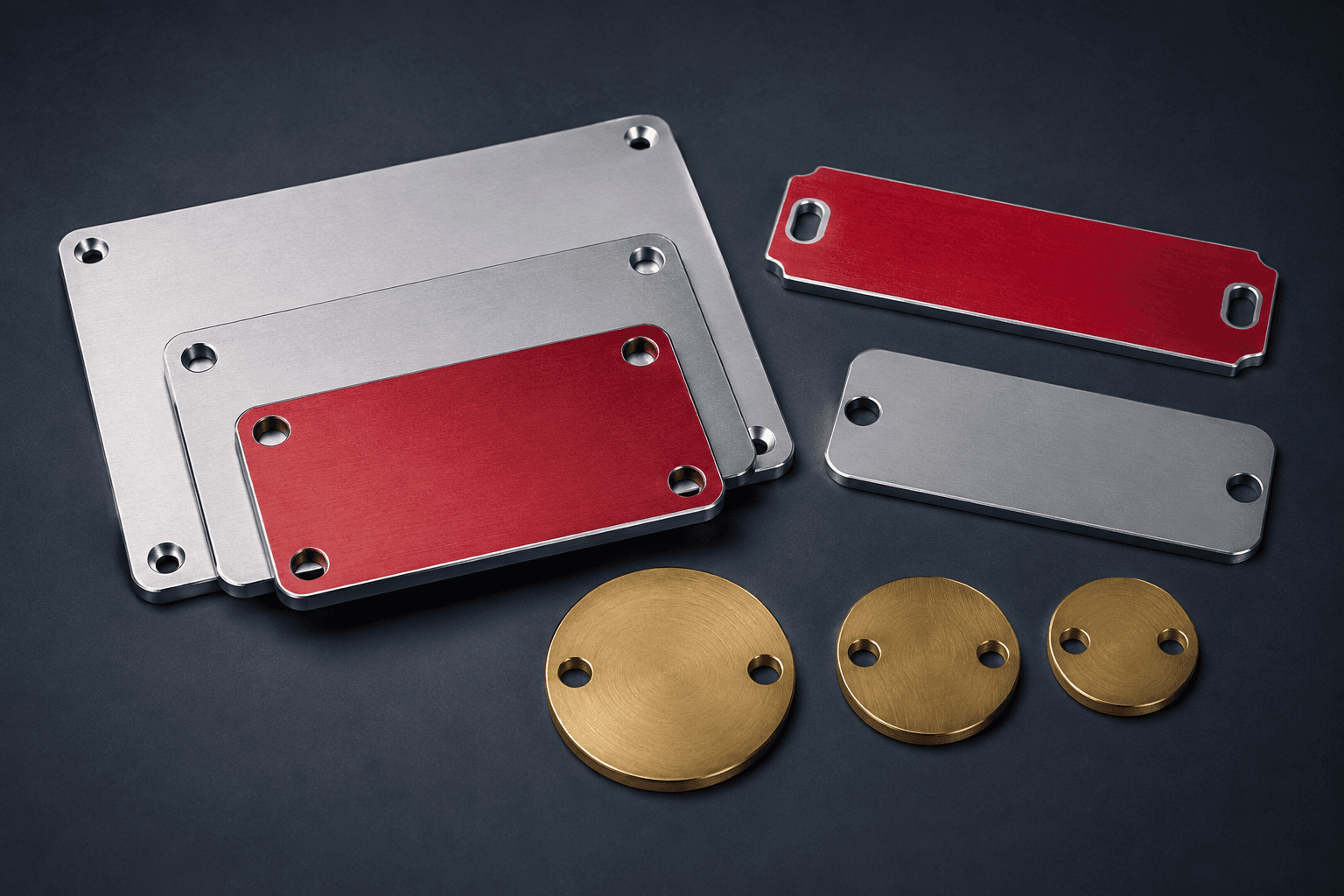
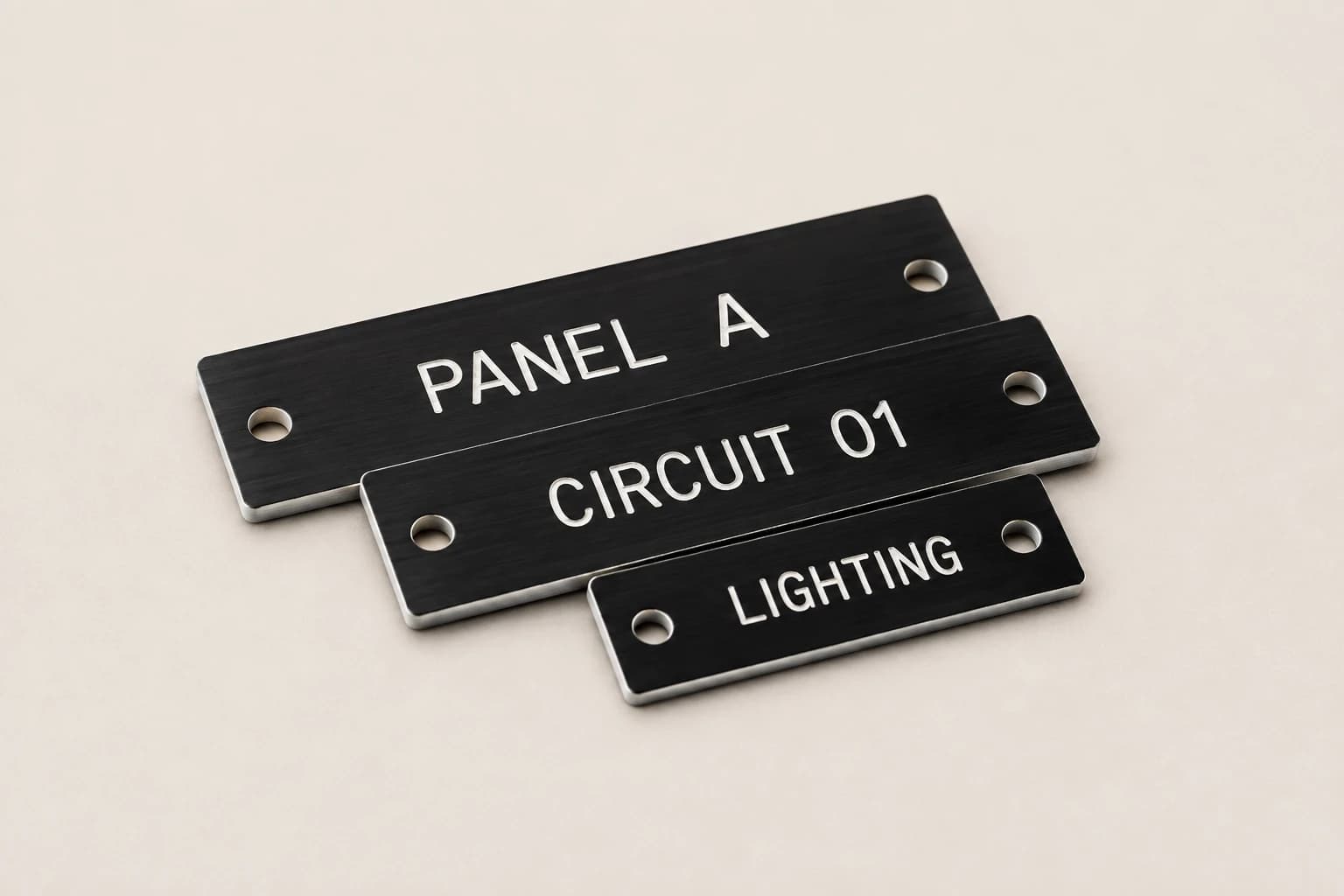
Separate plate identity from package identity
Keep fields for production line, exact engraving, physical format, copies and kit reference. A plate's wording should not change merely because it moves to another receiving group. Conversely, a kit label needs enough information to identify its contents without being mistaken for an inscription that belongs on the equipment.
For identifiers that look numeric, Microsoft documents that Excel can remove leading zeros during conversion to numbers. Import those fields as text and verify them against the authorized source. Preserve the kit and plate references as supplied; do not let a convenient spreadsheet sort or formatting operation change what the project owner approved.
If one production line supplies several kits, use an allocation table rather than repeating the total quantity in every kit. For example, a line containing twelve copies might allocate three copies to each of four kits. The allocation total must equal twelve. Entering twelve against all four kits would describe forty-eight assigned pieces while the production order still contains only twelve.
Sources: Microsoft Support: Keeping leading zeros and large numbers
Illustrative example: four kits and twenty-seven tags
Imagine four fictional cabinet kits, A, B, C and D. Each needs four ordinary identifiers and two location-reference plates. That is six plates per kit and 4 × 6 = 24 plates for the four installation kits. The buyer additionally orders three specifically identified replacement copies to keep in a separate stores package. The entire order contains twenty-seven tags.
Load the example with four identifier groups at four copies, four location groups at two copies and three explicit spares. The calculation gives 16 + 8 + 3 = 27. The downloadable allocation file expands the four kit totals so receiving can see six expected pieces in A, six in B, six in C and six in D, followed by three in the stores group.
The file uses fictional group descriptions rather than real equipment legends. Before a real order, replace those descriptions with exact line references and identify which three plates the stores copies repeat. The stores package is not a fifth cabinet kit: it contains a different purpose and a different quantity. Calling all five packages identical kits would hide that distinction.
Suppose kit C later moves to a second shipment while its contents stay unchanged. The production total remains twenty-seven. The first shipment contains eighteen installation pieces plus three stores copies, or twenty-one pieces. The second contains kit C's six. Track that shipment split in dispatch and receipt fields; do not alter the original order to make each shipment appear to be the complete job.
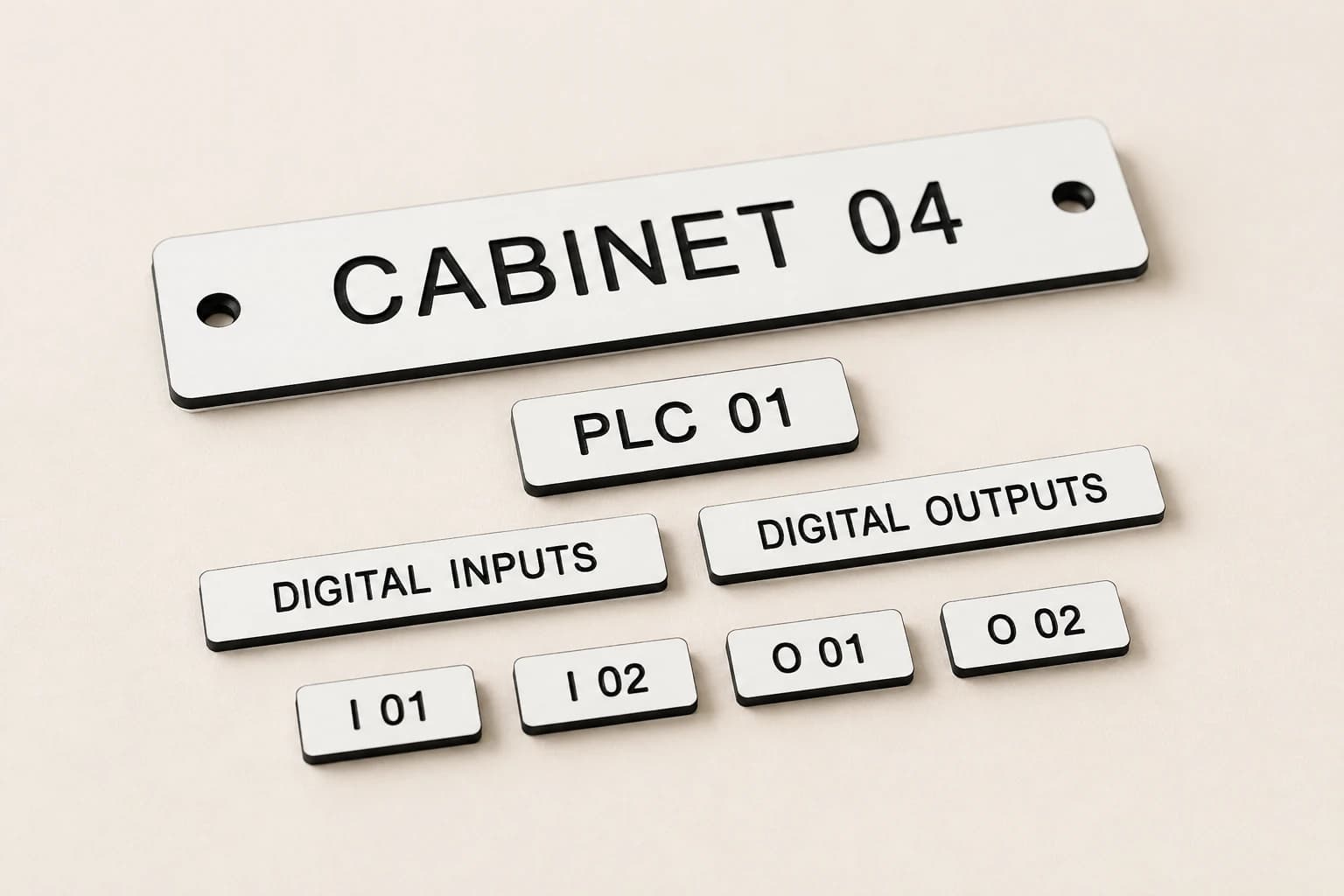
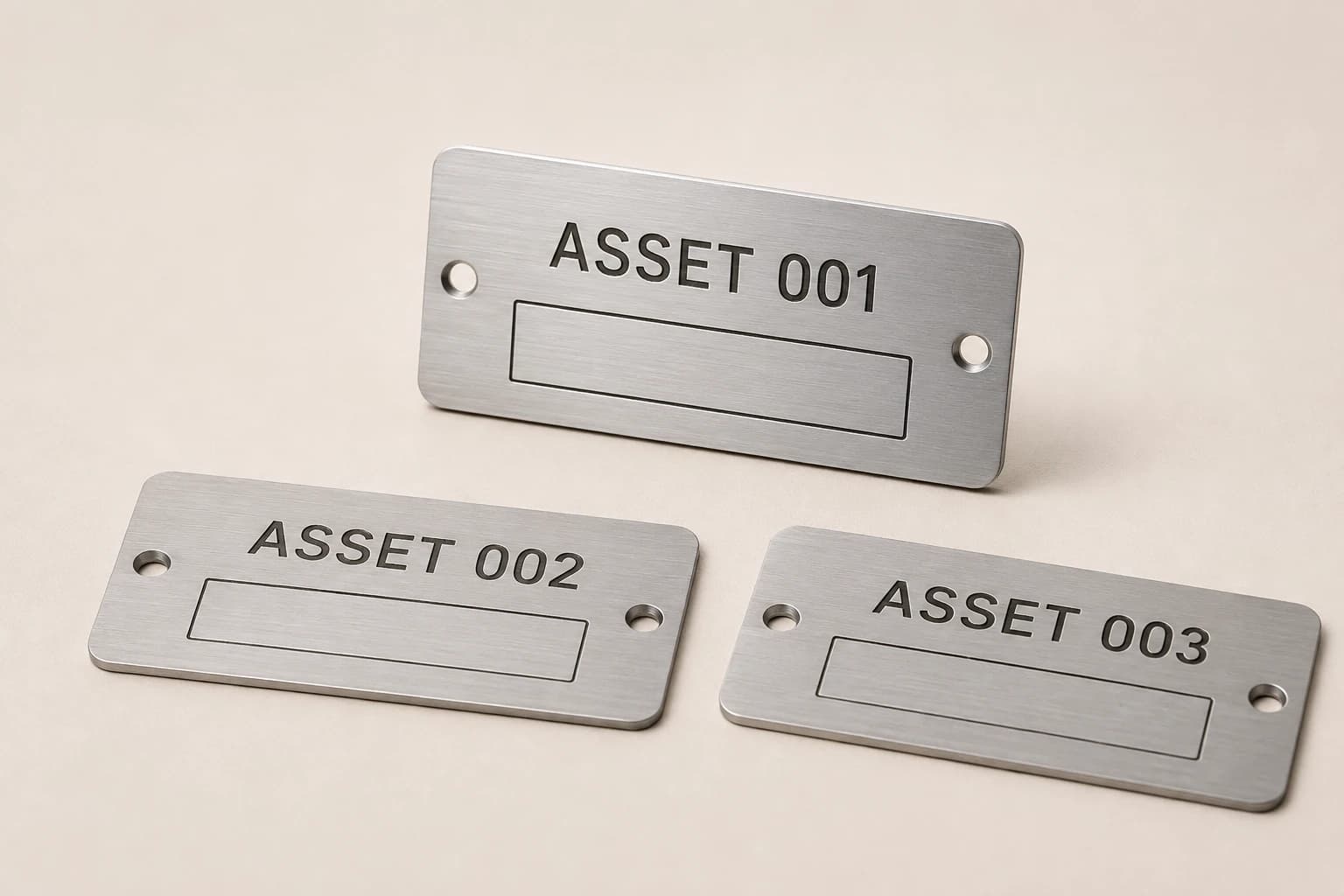
Different grouping methods serve different handovers
Choose the grouping that answers the purchasing question; keep the other references in the schedule.
| Option | What it counts or controls | What it does not establish |
|---|---|---|
| Loose production batch | Efficiently describes all approved plates by production line. | A ready-to-issue cabinet or installation package. |
| Kit per cabinet | Collects the specifically assigned pieces for one cabinet reference. | Authorization to install them or confirmation that the equipment record is current. |
| Kit per work stage | Separates approved pieces for a particular release or phase. | Completeness of later phases still awaiting approval. |
| Stores replacements | Keeps explicitly identified extra copies separate from installation inventory. | A generic spare for every possible future wording change. |
| Shipping carton | Groups packages for transport and receipt. | A fixed number of kits or tags unless the packing list states it. |
Reconcile the physical pieces in this example
Load the illustrative article example, then replace each group and quantity with your approved order. Keep exact identifiers and specifications in the separate schedule.
Method: Multiply each row count by copies per group, then add only explicitly entered spares. This is an inventory calculation, not an engineering or compliance review.
Build your plan
Use one row per tag type. For example: Valve labels | 20 | 2. Material, dimensions, legend text and mounting belong in the final tag schedule.
Use the article’s example files
This is a fictional planning example. Import identifier columns as text and replace sample rows with authorized project data before requesting production.
Make the package label useful without exposing extra data
A package label can show the project reference, kit reference, schedule revision and expected physical count. Include the construction or stage reference where it prevents confusion. Keep detailed equipment information inside the controlled packing list when it does not need to be visible on an outer package. The label's purpose is to help an authorized recipient match the package to its record.
State whether different formats need separate internal compartments and whether a protective layer or individual separation is requested. Ask production to propose suitable protection for the actual materials and finishes. Do not prescribe a universal packing method from the appearance of a concept image. Sharp edges, delicate finishes, loose mounting parts and differently sized plates may call for different arrangements, subject to the actual design.
If attachment components are included, list them as components with their own counts. A kit of six plates does not establish that six fasteners or six adhesive pieces are included. Document the selected mounting arrangement and confirm what is supplied. The installation team should receive an unambiguous contents list rather than infer the intended attachment method from miscellaneous hardware in the bag.
Keep revised or incomplete kits out of the release
A late legend correction should identify the affected production line and every kit allocation that uses it. Mark the old revision as superseded, state the replacement text approved by the source owner and record whether production has already started. The response may differ for a file awaiting artwork and for a completed plate. Resolve that status before promising a change can be included in the original delivery.
Do not mix pieces from different revisions into an apparently complete kit without a clear reconciliation. If a kit must ship partially, label it as partial and list the missing line references and quantities. The receiving team then has a visible open item rather than a bag whose six-piece label no longer matches its contents.
Use a separate hold list for questions that prevent release. Examples include an uncertain equipment identifier, a missing mounting drawing or an unapproved replacement wording. A kit can be planned while those questions are open, but its planning row should not become a production instruction merely because the purchasing deadline is approaching.
Reconcile on receipt and again at issue
At receipt, match the package reference and revision to the expected shipment, then check the contents against the kit list. Record received quantities and any discrepancy separately from ordered quantities. A sealed bag label is useful for identification, but it is not evidence that all the correct objects are inside. The receiving check should reflect the level of verification the project requires.
When a kit is issued, record which authorized work group received it and retain any unopened or returned items under their original references. If a team returns two unused plates, do not treat them as generic stock. Their exact wording and construction determine whether they are useful as replacements or belong to a different stage of the project.
For a reported shortage, identify the kit, line reference, expected copies, received copies and revision. A photograph can help explain the discrepancy when permitted, but the controlled schedule remains the source for what should have been supplied. This creates a specific correction request and prevents a replacement from accidentally duplicating a plate already accounted for elsewhere.
Keep the kit record after the installation phase
Retain the released kit allocation alongside the final production schedule. A later request for kit B should distinguish a full repeat, a replacement of named lines and an updated set using a revised equipment record. Those are different orders even if the receiving address and cabinet reference have stayed the same.
When requesting a full repeat, ask whether the previous material, finish and packing arrangement can be reproduced and identify any acceptable alternatives. The historical record explains the desired result; it does not guarantee current stock, identical material batches or a particular production date. A well-kept kit register makes that conversation specific without turning old purchasing assumptions into new promises.
Questions before ordering
Can the labels arrive already sorted by cabinet?
Request that grouping in the quote and provide a kit allocation tied to exact production lines. Confirm the package labels, internal separation and contents list as part of the order; do not assume the default bulk packing includes them.
Should spare plates go inside every kit?
Only if that is your chosen issue method. List each spare inscription and allocation. Keeping stores copies separate may make the installation count clearer, while another project may need an explicit spare in each kit.
Does a kit count prove all tags are correct?
No. Six pieces in a six-piece kit can still contain the wrong legend or format. Reconcile the references, revision and quantities against the released contents list.
What changes when a kit ships later?
Record its shipment allocation and outstanding receipt separately. If the contents do not change, the original ordered quantity stays the same. A split delivery should not create a second production order by accident.
Explore the collection’s design direction
This existing narrated collection overview introduces the product designs. It provides visual background; the specific decision, comparison and worked example are in the article above. Images are original concepts rather than completed customer orders.
25-second overview
Define the installation
Before changing a tag material, identify what cannot change: the legend, mounting pattern, exposure and project requirements. Compare complete options, preserve identifiers in a controlled file, and review the longest text at the proposed size. Keep the approved drawing with the order record. Use the tag calculator to prepare quantities for your quote.
Prepare your brief and request a written quote.
Bring this decision into your design brief
Choose a relevant product direction and include the measurements, quantity, approved wording and delivery destination for your project. We can then develop a specific design and quote around those requirements.
Sources and scope
The sources below support the cited technical details. The ordering workflows are editorial recommendations. Your project specification, price and schedule are established in the written quote and approved proof.
- Microsoft Support: Keeping leading zeros and large numbers · checked 2026-09-05
Which buying guide should you read next?
All buying guidesCompares two published facility electrical identification specifications side by side to show that nameplate colors differ by owner, then lists exactly what to send so engraved tags match your own specification. Panel Tag Co engraves to the specification you supply and makes no code-compliance claim.
Protect the exact identifier through spreadsheet import, export, proof and packing while separating engraving text from quantities and refusing to reconstruct lost digits without an authoritative schedule.
Count unique legends, physical copies and installation kits separately. Preserve identifiers as text and attach the approved drawing revision, dimensions and mounting detail to each group. Split the packing schedule by panel or site without changing the source identifiers.
A replacement plate needs a complete mounting pattern as well as its outside dimensions. Preserve the original units, hole references and approved drawing.